RH17 · B2028 · 35 mi from central London · Period Homes
Victorian & Edwardian Floor Restoration & Sanding in Ardingly
In Ardingly we've been working on period homes for 25 years. The rule we don't break: match the era. Wide oak planks belong in Georgian and Regency; narrow pine strips belong in Victorian; parquet blocks belong in Edwardian and Arts & Crafts. Cross-matching reads wrong immediately, even if the buyer can't say why.
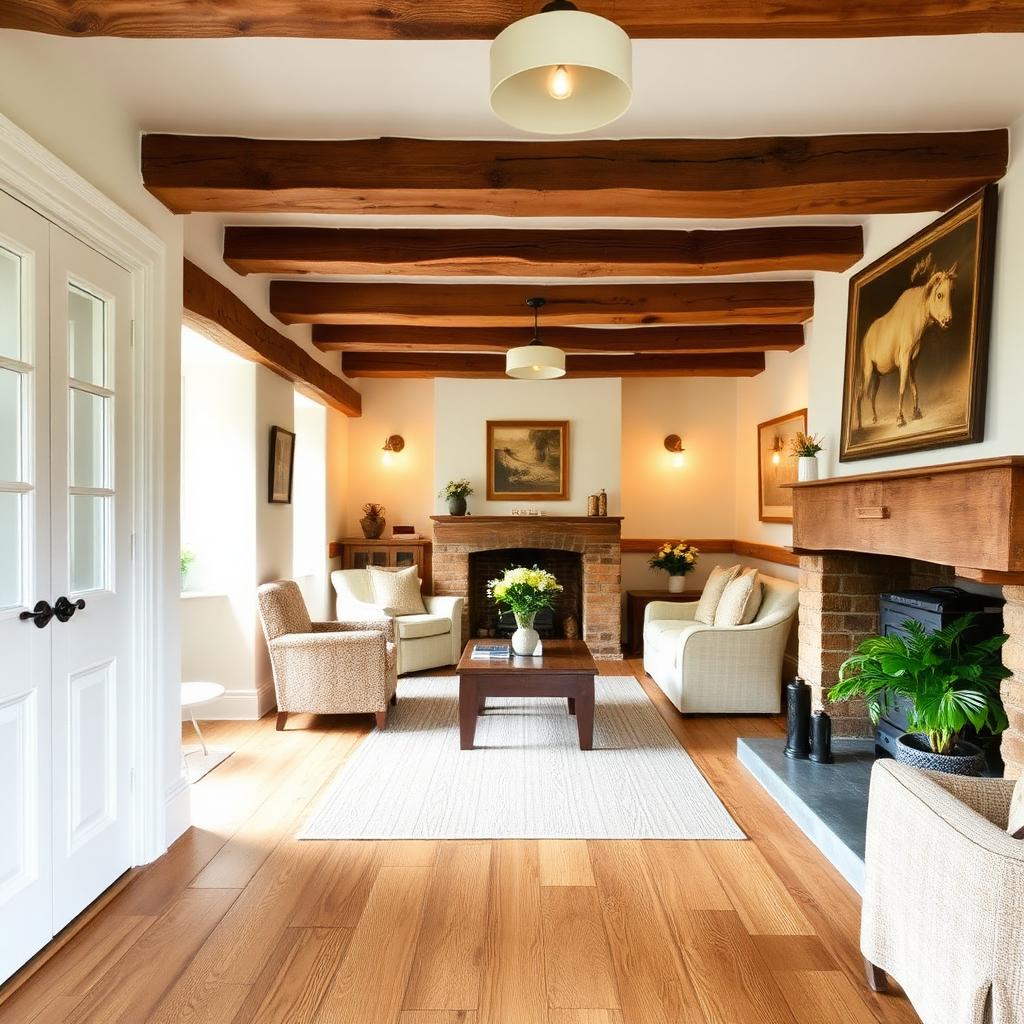
The restoration-vs-replacement call in RH17 homes
On Ardingly period property surveys we measure remaining board thickness. Anything over 15mm on a solid pine or oak board is restorable — usually with 4–6 sandings of remaining life. Below 12mm and we recommend replacement, matched to the original spec.
Era-matching Floor Restoration & Sanding for Ardingly period homes
Victorian (1830–1901) Ardingly homes: narrow pine strip flooring at 120–160mm, face-nailed with cut-nails or square-heads. We restore in whitewash or natural, or replicate in reclaimed pitch pine where original boards are unsalvageable.
Local context
Wakehurst Place / Kew Gardens annex on village edge
Nearest station
Haywards Heath mainline
Why Ardingly clients book us for period homes
- 25 years of Ardingly period property restoration experience
- Reclaimed and mill-direct sourcing for conservation cottage original-spec replacements
- 25 years of Ardingly period property restoration experience
- Reclaimed and mill-direct sourcing for conservation cottage original-spec replacements
The details that separate a period fit from a modern one in Ardingly
Threshold and skirting detail on Ardingly period floors: original brass strips at doorways, undercut skirting boards to hide the floor edge, no scotia beading. We fit to the original detailing convention — modern scotia on a Victorian floor is a visible give-away.
Period Homes in Ardingly — questions
- Should I restore or replace the original floor in my Ardingly period home?
- In Ardingly we restore where board thickness is over 15mm and joists are sound — usually 60% of Victorian and Edwardian floors we survey. Restoration typically costs 40–60% of full replacement and keeps the original timber.
- Is engineered wood appropriate for a Ardingly period home?
- In some rooms yes, in others no. Rear extensions and kitchen additions on Ardingly period homes take engineered wood well. Original reception rooms should keep solid timber or matched parquet where possible.
- Can you fill the gaps between original boards on a Ardingly period floor?
- Yes — resin fill for gaps 4mm+, sliver of matched timber for larger gaps. Result is seamless and stable through seasonal humidity cycles.
- How much for a Ardingly period home floor restoration?
- Typical Ardingly Victorian reception room (18–25m²) restoration: £1,650–£2,900 including sanding, gap-filling, whitewash or natural finish. New matched flooring in the same room: £2,800–£4,900.
- What board width suits a Ardingly Victorian terrace?
- 120–160mm narrow strip pine or oak matches the Ardingly Victorian era. Wider boards (200mm+) look wrong in a Victorian room — they belong in Georgian and Regency properties.
- Will the original floor take a modern hardwax oil finish in Ardingly?
- Yes — hardwax oil is the closest modern equivalent to the original wax finishes on Ardingly Victorian and Edwardian floors. Natural sheen, breathable, and re-coatable without sanding.
Period home Floor Restoration & Sanding in Ardingly — done sympathetically
Own crew, era-matched, original detail respected.
A Ardingly Victorian, Edwardian or Georgian floor in Floor Restoration & Sanding should match the era in board width, direction and finish. Everything else reads wrong to a period-trained eye.