RM3 · A12 J28 / M25 · 17 mi from central London · Kitchen Extensions
Side-Return & Wrap Engineered Wood Flooring in Harold Wood
In Harold Wood (RM3) we typically survey a kitchen extension 8–10 weeks before the floor goes in. That gives the new screed time to cure, the UFH to commission, and us time to plan the level transition from the old kitchen subfloor into the new. Skip this planning and every new build extension floor has a 5–8mm step at the join — always visible, always regretted.
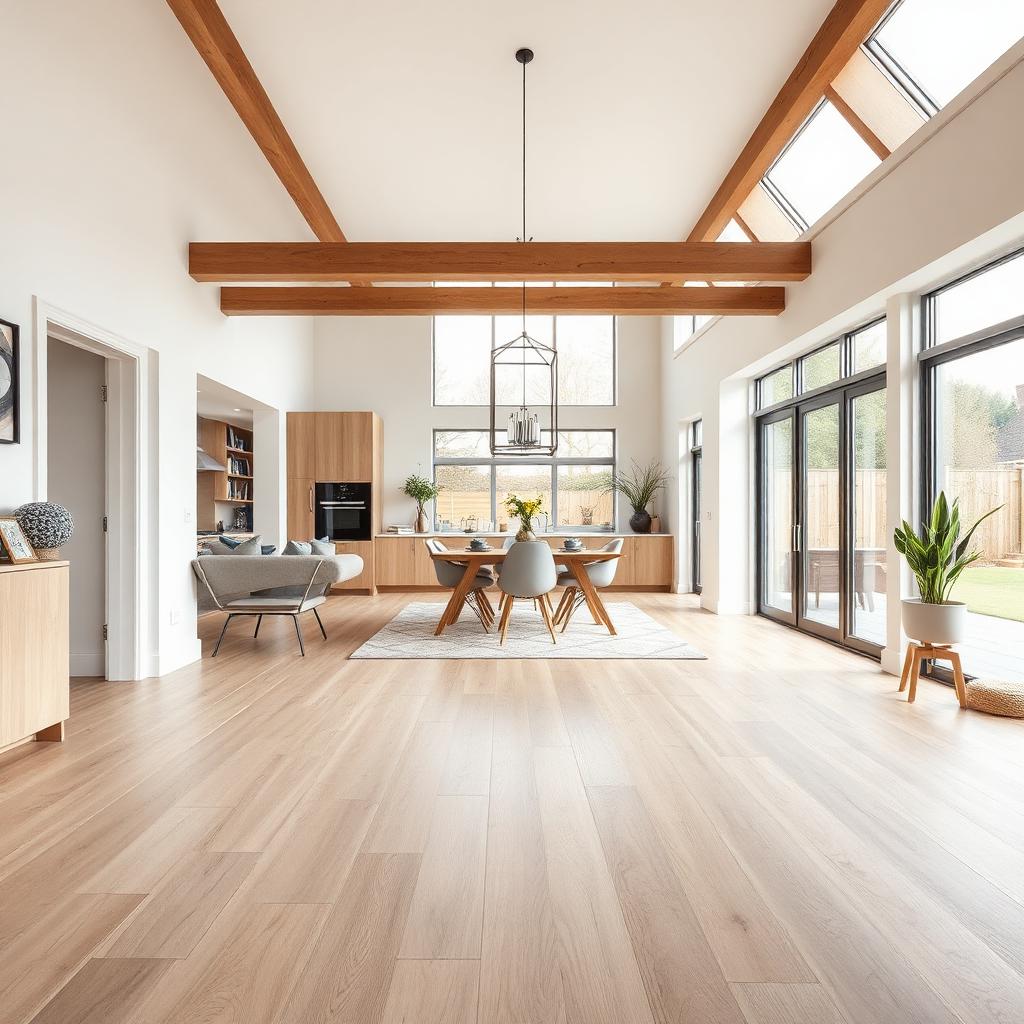
Getting the height transition right in Harold Wood rear extensions
Where the two levels genuinely can't be matched (rare, but real), we design a two-step visual transition with a matched threshold ramp — never a 'hope no-one notices' butt-join.
Making the extension read as one floor with the existing kitchen
On Harold Wood kitchen extensions we specify the whole floor — extension plus retained kitchen — as one order, from one batch. Trying to match into a 5-year-old kitchen board never works; the new boards read fresh, the old ones read weathered. Better answer: re-do both, so they're the same age from Day 1.
Local context
Major NHS hospital regeneration site (Kings Park)
Nearest station
Harold Wood (Elizabeth Line)
Why Harold Wood clients book us for kitchen extensions
- Batch-matched supply across extension and retained kitchen
- Silicone-sealed wet-zone perimeter on every Harold Wood extension
- Batch-matched supply across extension and retained kitchen
- Silicone-sealed wet-zone perimeter on every Harold Wood extension
UFH commissioning for Harold Wood kitchen extensions
Build-up on Harold Wood extension UFH floors: max 20mm total. Board 14–15mm, thermal underlay 4–5mm. Anything thicker slows response and costs energy.
Kitchen Extensions in Harold Wood — questions
- How much does a Harold Wood kitchen extension floor cost?
- Typical Harold Wood extension (20–25m² new + 10m² retained kitchen) in engineered oak with UFH: £3,800–£6,400 fitted. In LVT: £2,200–£3,900. Both include commissioning and silicone perimeter.
- How do I match the level between my Harold Wood extension and existing kitchen?
- Under 3mm difference we ramp with matched threshold. Above 3mm we level with self-levelling compound before fit. We measure both levels on the survey and price accordingly.
- Can I have engineered wood in a Harold Wood extension over UFH?
- Yes — engineered wood is the ideal spec for Harold Wood extensions over UFH. Certified UFH-compatible ranges, glued down to screed, run at up to 27°C surface temperature. Solid wood cannot go here.
- Do we need to remove existing kitchen units on a Harold Wood extension floor job?
- Usually no — we fit up to the plinth line with colour-matched beading. Only jobs where the kitchen is being replaced anyway get full floor-under-cabinets install.
- Can I blend a new extension floor into my existing Harold Wood kitchen?
- Yes — but the winning strategy is to re-do both floors together, from one batch. Trying to match into an existing floor almost always shows the join. Costs more but reads seamless.
- Should the extension floor match the kitchen or the lounge in Harold Wood?
- In Harold Wood open-plan extensions the floor should match both — one continuous run through kitchen, dining and living. Zoning by flooring change is out of fashion and never re-sells well.
Kitchen-extension Engineered Wood Flooring in Harold Wood — planned as one floor
Own crew, level-matched, UFH-commissioned, batch-supplied.
A Harold Wood kitchen extension floor that ignores the level transition or the UFH cycle fails at exactly those points, on exactly the schedule you'd predict.