Read the lease first
Many leases specify an acoustic performance rather than banning hard floors outright. Send us the wording and we'll spec an underlay system to meet it. Fitting first and reading the lease afterwards is a genuinely expensive mistake, and it's the most common one we see in apartments.
Acoustic build-ups
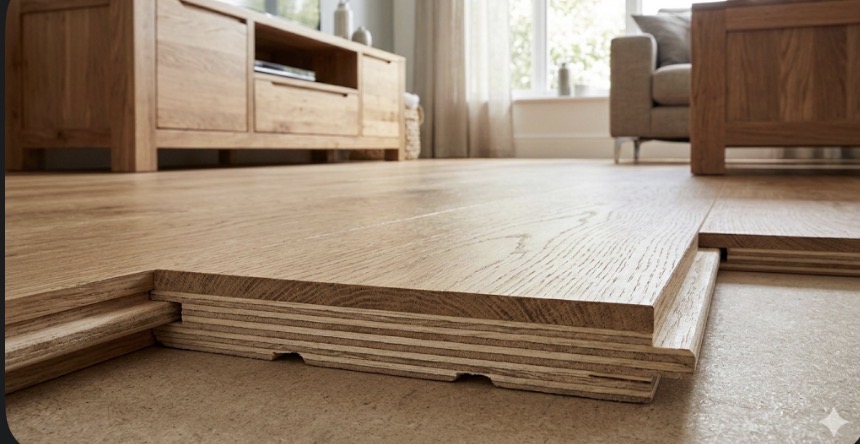
Floating a floor on an acoustic underlay is the common route; a bonded acoustic mat under a glued floor performs well too and keeps the solid underfoot feel. Which one suits depends on the dB target, the existing deck and how much height you have.
- Engineered wood floats or bonds — the flexible option in a flat
- LVT and SPC work well where an acoustic layer is required
- Solid wood is rarely the right answer in a leasehold flat
Height is the constraint
Flats have unforgiving thresholds — front doors, lift lobbies, wet-room level changes. Every millimetre of underlay and levelling has to be checked against door clearances at survey, because it can't be reduced once the build-up is agreed.
Access and site logistics
Lift bookings, parking permits, restricted delivery windows and building management approvals all affect the programme. Tell us at survey and it goes into the schedule rather than becoming a problem on the morning of the fit.