Specify for the traffic, not the average
Wear is concentrated in circulation routes, entrances and under desks, not spread evenly. We spec a 0.55mm minimum wear layer on commercial work and consider zoning — a harder-wearing product on the main routes with a different finish in meeting and break-out spaces.
Repairability keeps the floor in service
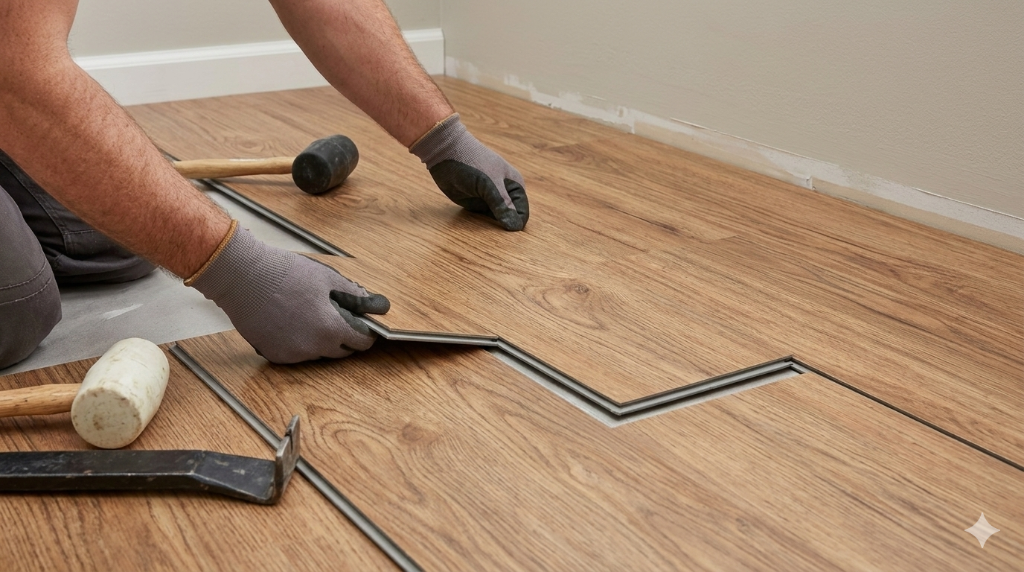
Glue-down LVT lets a damaged plank be lifted and replaced without closing the floor. Keeping spare stock from the same batch at handover means a repair matches years later — the alternative is an obvious patch or a full re-lay.
- Chair castors: use hard-floor castors or mats at desks
- Entrance matting removes the grit that causes most surface wear
- Retain batch-matched spares for future repairs
Working around occupancy
Fits can be phased area by area or scheduled outside working hours where the building allows. Tell us the constraints at survey — access, noise hours, lift bookings, fire-door and threshold detailing — and they go into the programme rather than surfacing mid-job.
Subfloor and services
Raised access floors, floor boxes, and cable routes all affect the build-up and the detailing around them. We survey these properly, because cutting neatly around a floor box is the difference between a professional finish and an obvious one.