What width does to a room
Wide planks (roughly 190mm and up) show more of each board's character and create fewer visual lines, which makes open-plan spaces feel calmer and larger. Narrow boards create rhythm and suit period rooms, hallways and anywhere you're matching existing floors elsewhere in the house.
Movement and why wide means engineered
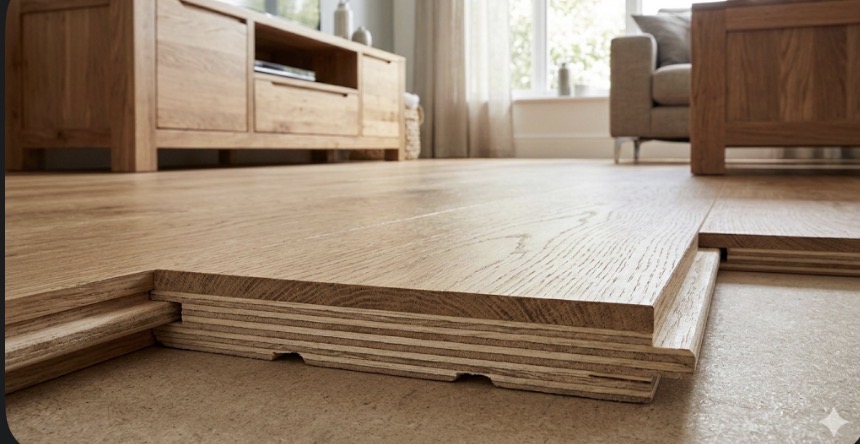
Seasonal movement happens across a board's width, so the wider the board, the more absolute movement there is. That's why wide-plank floors are engineered as standard: a cross-bonded core keeps a 220mm board stable where a solid one would cup or gap.
Subfloor flatness is less forgiving
A wide, stiff board bridges dips rather than following them, so an uneven subfloor produces rocking and hollow spots. Wide-plank projects usually carry more levelling work in the quote, and we flag it at survey rather than after the boards arrive.
- Wide planks: fewer joints, calmer look, more levelling work
- Narrow boards: period-appropriate, easier over imperfect subfloors
- Match existing widths when a floor continues between rooms
Cost
Wider boards cost more per square metre because they come from larger, cleaner timber. Fitting can be quicker on a big open area with fewer boards to lay, but the extra subfloor preparation often cancels that saving out.