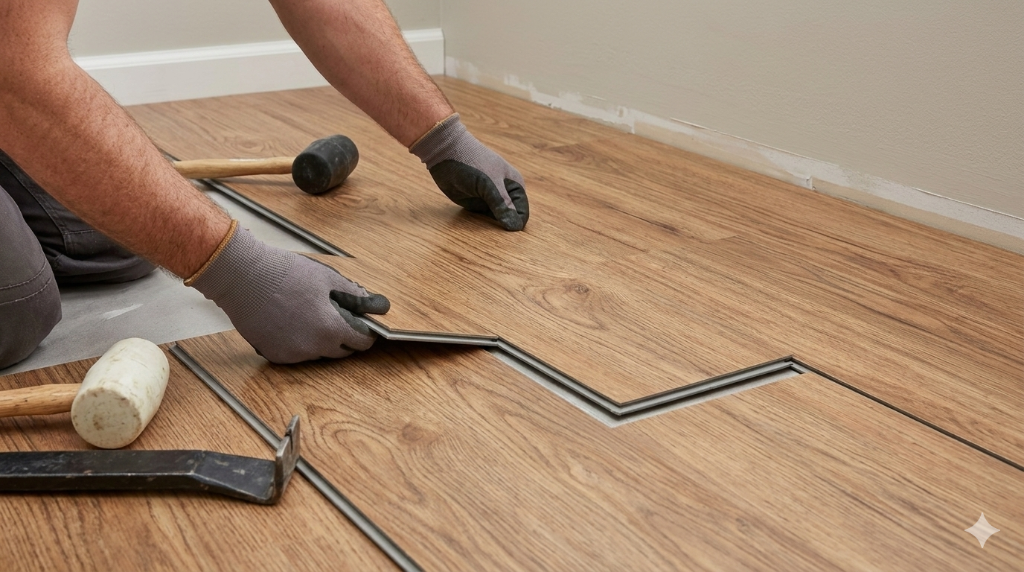
What each one is made of
Laminate is a photographic decor layer over a compressed fibreboard core. LVT is a printed vinyl plank with a clear wear layer; SPC is the same idea over a rigid stone-composite core. The fibreboard core is the weak point: once water reaches it, it swells and the damage is permanent.
Water and spills
In a kitchen, utility, bathroom or ground-floor rental, LVT or SPC is the safer specification. A dishwasher leak on LVT is a mopping job. The same leak on laminate usually means lifting and replacing boards where the core has blown at the joints.
Wear layer is the spec that matters
Ignore total plank thickness in the showroom and ask about the wear layer. We spec a minimum of 0.55mm on anything with commercial or heavy family traffic, which is where LVT's 15–25 year service life comes from.
- 0.3mm wear layer: light domestic use only
- 0.55mm wear layer: our minimum for kitchens, hallways and rentals
- Laminate is graded by AC rating instead — AC4 or better for a hallway
Subfloor prep is not optional for LVT
This is the cost people miss. LVT and SPC need a dead-flat base: any dip over about 3mm telegraphs through the plank within months. Our LVT quotes normally include latex screeding for that reason. Laminate floats over underlay and is more forgiving of a slightly uneven floor.
Cost, noise and repairs
Our LVT is supplied and fitted from £42/m². Laminate is cheaper on materials but doesn't sound or feel the same underfoot — it's hollower, and it can't be spot-repaired convincingly. A glued LVT plank can be lifted and swapped individually.