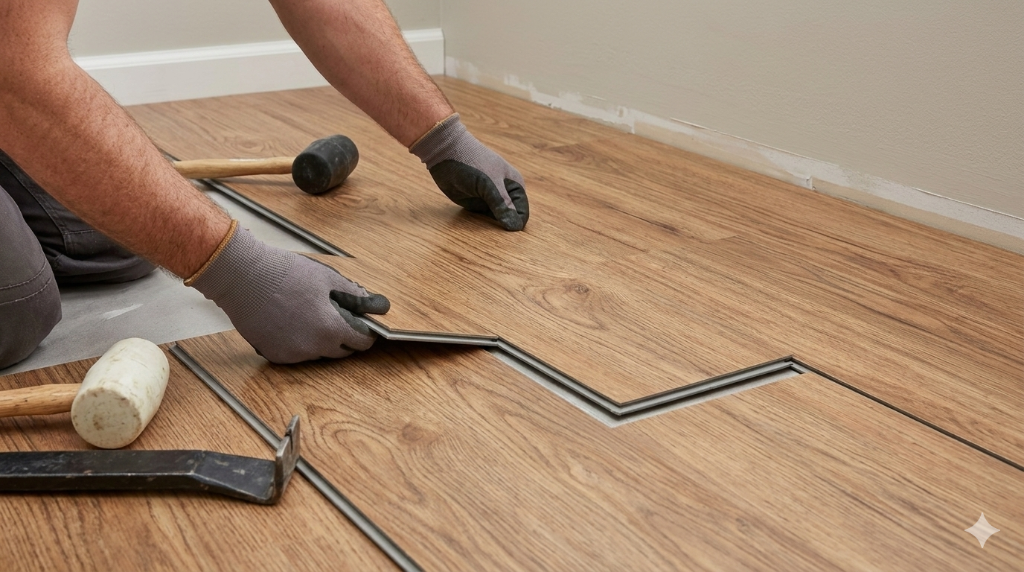
LVT and SPC are the answer
A waterproof core with a sealed perimeter handles a bathroom's humidity and splashes indefinitely. Wood-effect and stone-effect planks and tiles both work; stone-effect LVT in a bathroom gives you the tile look without the cold or the grout maintenance.
Why we avoid wood here
Even a well-finished engineered board is only water-resistant at the surface. Water finds the end joints, the perimeter and the area around the WC pan, and once it's under the board it doesn't dry. If you love the wood look in a bathroom, use a wood-effect LVT.
Preparation and sealing
The subfloor is sealed and levelled, the perimeter is detailed, and the plank runs cleanly around the sanitaryware rather than being packed with trim. In an upstairs bathroom we check the deck for movement first — a springy floor will telegraph through any thin covering.
- Dead-flat base: dips over about 3mm show through within months
- Perimeter and sanitaryware detailing sealed rather than trimmed over
- Threshold height checked against the door swing before ordering
En-suites and cloakrooms
Small rooms are all edges, so the work is in the detailing rather than the square metreage. They're often fitted alongside a larger project, which keeps the visit efficient — worth planning together rather than as a separate call-out.