Construction and format
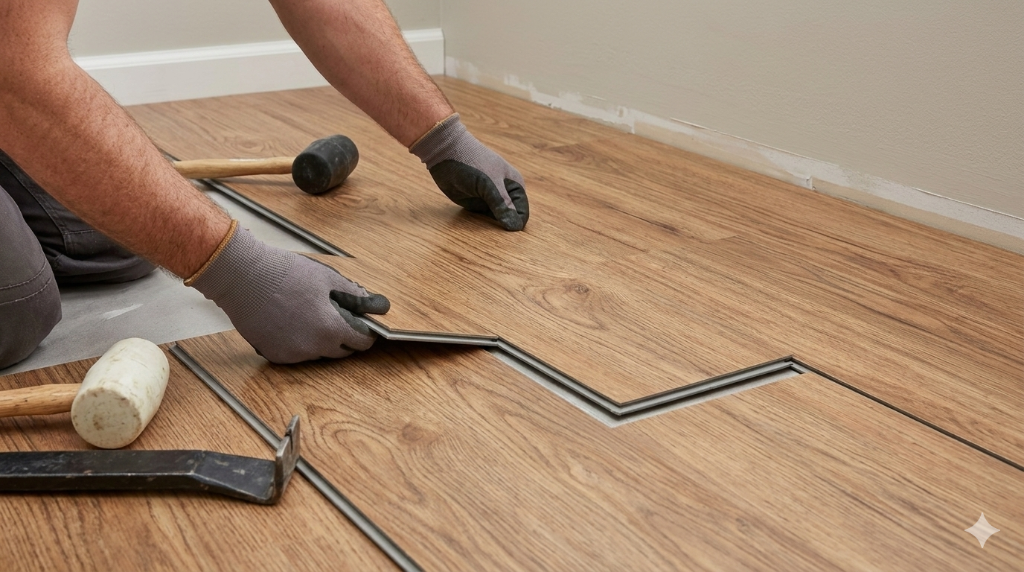
LVT comes as individual planks or tiles, typically 2–5mm thick, with a printed and embossed decor layer under a clear wear layer measured in microns. Sheet vinyl arrives as a roll two, three or four metres wide, cut to the room and either loose-laid, tackified or fully bonded, with seams heat-welded in commercial specifications. LVT is designed to be laid in patterns; sheet is designed to eliminate joints.
Water performance is not equal
People assume LVT is fully waterproof. The plank body is, but the joints between planks are not sealed unless you specify a welded or bonded system. Sheet vinyl, welded and coved up the wall, gives you a genuinely tanked floor — which is why hospitals, kitchens in commercial premises and wet rooms use it. For a domestic bathroom or utility, either works; for anywhere that gets hosed or mopped hard, sheet wins.
- Domestic bathroom: LVT or sheet, both fine
- Wet room or commercial kitchen: welded sheet with coved skirting
- Kitchen-diner: LVT, for the look and the plank-level repairability
Repairs and life
A damaged LVT plank can be lifted and swapped in an hour if you kept spares — one of its quiet advantages. A gouge in sheet vinyl usually means replacing the whole run, because patching a sheet visibly patches it. Against that, sheet has no joints to lift, so it very rarely fails in the first place.
Look and comfort
LVT is where the design work happens: convincing oak grains, stone effects, herringbone layouts, contrast borders. Modern sheet vinyl has improved enormously but still reads as a continuous surface rather than individual boards. Underfoot, cushioned sheet is warmer and softer, which matters in a bathroom on a cold morning; rigid-core LVT is firmer and quieter.
Cost and fitting
Our LVT starts at £42/m² supplied and fitted. Sheet vinyl is generally cheaper per square metre in a simple rectangular room and more expensive once you add welding, coving and complex cuts. Both need a genuinely flat subfloor — vinyl telegraphs every ridge and screw head, so latex levelling is usually part of the quote rather than an optional extra.